

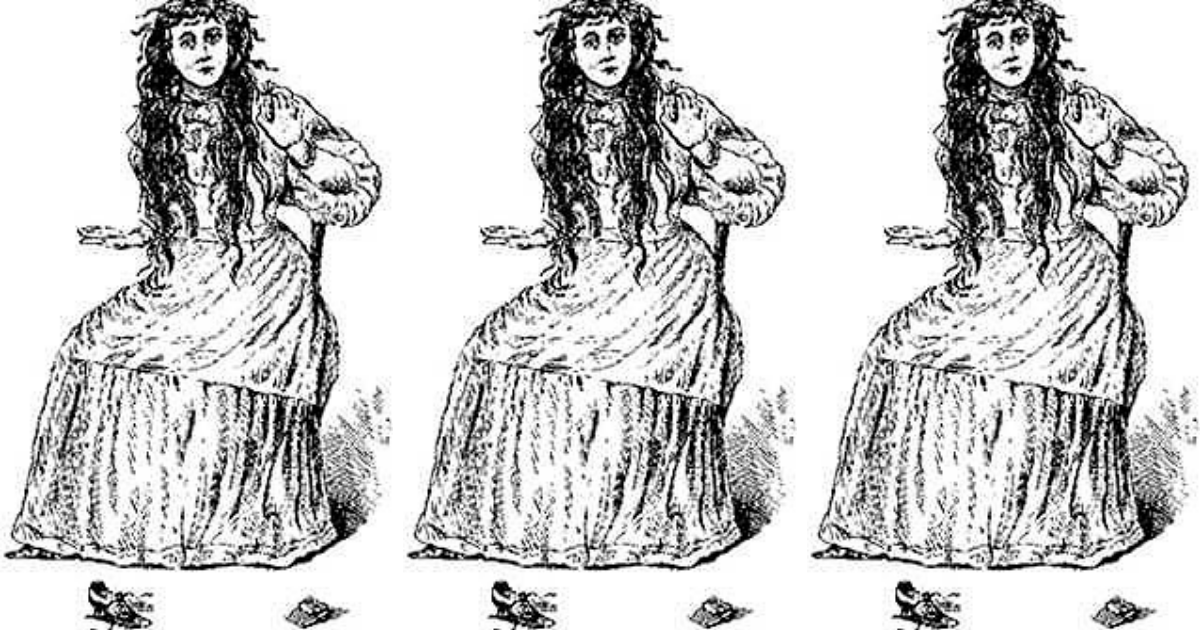
By Tabitha Evans Moore
EDITOR & PUBLISHER
ADAMS, Tenn. — The trouble on John Bell’s farm started small.
In 1817, Bell was walking his land along the Red River in Robertson County when he spotted an animal he couldn’t quite name. It looked something like a dog. He fired at it, and it vanished. Around the same time, his son Drew saw an enormous bird perched on a fence, and a man enslaved on the Bell farm said a big black dog had been following him at night.
Then the noises started.
Knocking on the walls. Scratching. Something gnawing in the dark. Over the next year or more, the disturbances grew until the house itself seemed to shake. Bedcovers were stripped off sleeping children. Family members were slapped, pinched and had their hair pulled. Whatever it was, it moved into the house and settled in.
It also learned to talk.
That is where the story of the Bell Witch stops being an ordinary ghost tale and becomes the most famous haunting in Tennessee history, and maybe in the country.
John and Lucy Williams Bell came to Middle Tennessee from North Carolina in 1804 and built a prosperous farm near what is now the town of Adams, just south of the Kentucky line. They had several children. By most accounts, they were respected, churchgoing people.
The voice that came to their house was neither.
According to the legend, it recited prayers and argued Scripture. It imitated the voices of neighbors. It sang, cursed and turned up at weekly prayer meetings. It answered to the name Kate, and at one point it called itself “Old Kate Batts’ witch,” after a real neighbor of the Bells who reportedly had no fondness for the family.
Kate was not cruel to everyone. She was gentle, even affectionate, with Lucy Bell. She saved her worst for two people: John Bell and his daughter, Betsy — a teenager engaged to a young man named Joshua Gardner. Kate wanted no part of it. She tormented Betsy over the match until, in 1821, Betsy broke off the engagement.
John Bell got worse. Over several years his health failed, and the legend says the spirit made sure of it. On Dec. 20, 1820, he died. The family found a small vial of dark liquid in the house. When someone gave a drop to the family cat, the cat died. Kate took credit, claiming she had given Bell the dose herself.
It is often said to be the only death in American history blamed on a spirit. That is a claim no one can prove or disprove, which is part of the appeal.
The legend’s most famous visitor was Andrew Jackson.
As the story goes, Old Hickory heard about the trouble in Robertson County and rode up from Nashville with a group of men to see it for himself. Near the farm, his wagon wheels froze in place and would not turn. A voice from the woods told him he could go on, and the wheels started moving again. Jackson and his party reportedly spent a rough night and left in a hurry.
The Tennessee Historical Commission marker on U.S. Highway 41 in Adams tells that version, saying Jackson “retreated to Nashville after his coach wheels stopped mysteriously.”
Historians are less convinced. There is no record of the visit in Jackson’s own papers, and skeptics point out that his political opponents in the 1824 presidential race would almost certainly have used a ghost story against him if they had known one existed. The tale first appears in print decades after Jackson’s death, in a letter passing along what a man had heard from his grandfather.
That is true of most of the Bell Witch story.
The best-known account comes from Martin Van Buren Ingram’s An Authenticated History of the Famous Bell Witch, published in 1894, more than 70 years after John Bell died. Much of the book rests on roughly 90 pages Ingram attributed to Richard Williams Bell, one of John Bell’s sons, who reportedly wrote down the family’s experience years later under the title “Our Family Trouble.” No one has ever produced the original manuscript.
An earlier mention turns up in Goodspeed’s History of Tennessee in 1886, which describes the spirit as having the voice of a woman. But there is no known account written while the haunting was happening.
Skeptics call Ingram’s book historical fiction, or worse. Folklorists tend to see it differently. True or not, it is a record of what people in 19th-century Tennessee believed, and of how a family story grows into a legend when enough people tell it.
Kate left in the spring of 1821, about four years after she arrived. She promised to come back in seven years, and according to the family, she did. In 1828 she returned to Lucy Bell and two of her sons, quieter this time. The family did not encourage her to stay.
Before she left for good, she reportedly made one more promise: she would return to John Bell’s descendants in 107 years. That would have been 1935. If Kate kept the appointment, nobody wrote it down. She hasn’t needed to. The legend has done fine without her.
Today, the Bell family cemetery, an old farm well and traces of the lane Jackson supposedly rode down remain near Adams. A log cabin said to date from the Bell farm has been moved to the grounds of the old school in town.
The Bell Witch Cave, on land that was once part of the farm, has become the best-known stop for ghost hunters and the curious. The cave was not part of the original legend. It picked up its own stories in the 20th century, from a lantern that kept blowing out in the 1940s to soldiers from Fort Campbell who said in 1977 that something invisible grabbed them.
Hollywood found the story, too. It inspired the 2005 film An American Haunting and has been credited with influencing The Blair Witch Project, along with a long line of documentaries and low-budget horror movies.
Two hundred years later, nobody has explained what happened on the Bell farm. Maybe it was a hoax. Maybe it was a family’s grief and fear, retold until it hardened into something else. Maybe it was a neighbor with a grudge and a talent for throwing her voice.
Or maybe Kate is still out there along the Red River, waiting on someone to ask. •
ABOUT THE LYNCHBURG TIMES: The Lynchburg Times is Moore County’s most-read, independent news source and the only local media source owned by a Lynchburg native. We believe small-town newspapers are worth saving, not just here but everywhere they’re disappearing. Readers, small business partners, and underwriters who believe community journalism still matters support our work. If that idea resonates with you, consider becoming a supporter at lynchburgtimes.com.