

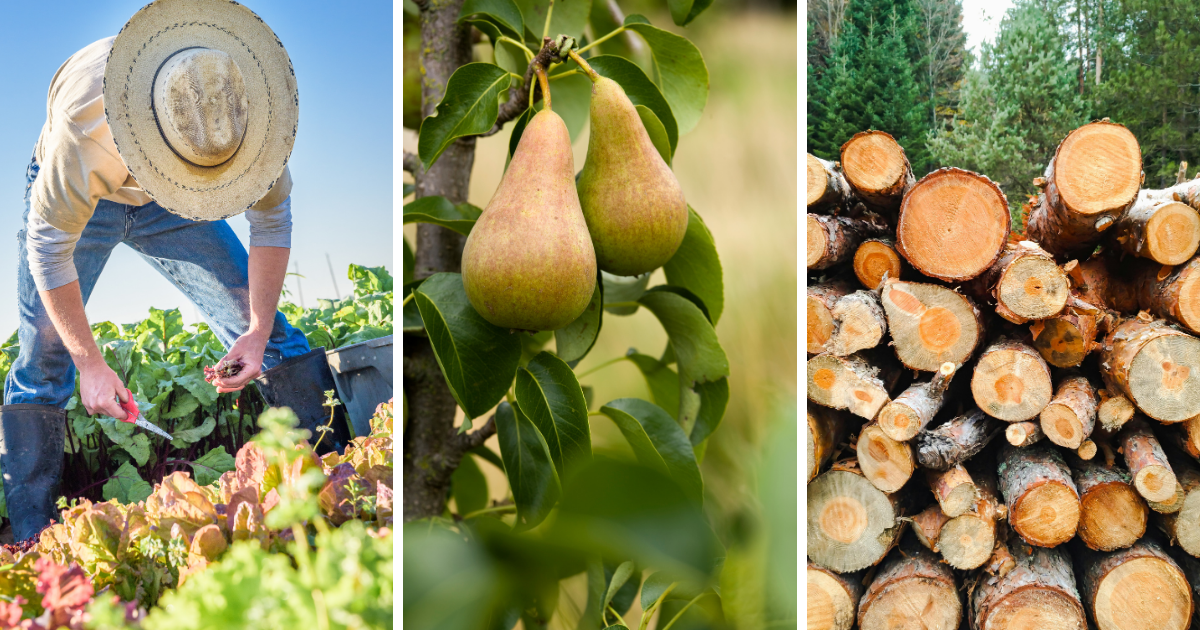
Tennessee farmers are coming off two brutal years. Row crop producers lost an estimated $192 million in 2025 alone on corn, soybeans, wheat, and cotton, layered on top of comparable losses the year before — the result of a punishing mix of low commodity prices, high input costs, drought, and trade disruptions that kept China largely out of the market for much of 2025. Tennessee Agriculture Commissioner Andy Holt told state lawmakers earlier this year that many row crop producers have posted negative margins for a second straight year, with little relief expected in 2026. For farmers whose income depends entirely on one or two commodity crops, that kind of exposure can be devastating when prices or trade conditions shift outside their control. Diversifying into other enterprises — vegetables, fruit, agroforestry, managed timber — doesn’t erase that risk, but it gives landowners more than one revenue stream to lean on when a single market turns against them.
That pressure isn’t abstract here at home. According to USDA’s most recent Census of Agriculture, Moore County counted 281 farms across 63,825 acres in 2022, with livestock, poultry, and related products accounting for 89 percent of agricultural sales — cattle alone brought in more than $12 million, dwarfing every crop category combined. But net cash farm income countywide fell 77 percent between 2017 and 2022, down to an average of just $2,452 per farm. More than a third of Moore County farms sell less than $2,500 worth of product a year, and 111 are classified as new or beginning operations — exactly the audience this webinar series is aimed at. For a county built on small, livestock-heavy farms with thin margins, a session on turning existing land into a second or third income stream isn’t abstract policy talk. It’s survival math.
Local landowners interested in generating farm income on property they already own or live on are encouraged to attend any of five free webinars from the UT Center for Profitable Agriculture, kicking off September 10. Sessions run via Zoom at 11:30 a.m. CDT and target small-acreage landowners, beginning farmers, and timber or forest landowners — though anyone is welcome to attend.
There are five break out sessions, and each looks at addition revenue stream from different angles.
- Thursday, September 10 — “I (Finally) Own a Piece of Tennessee! What’s Next?” with Dr. Kim Morgan, UT Department of Agricultural and Resource Economics. A starting-point session for new landowners figuring out what their property can actually support.
- Thursday, September 17 — “Where Do Vegetables Fit Into Your Production Plan?” with Dr. Annette Wszelaki, UT Department of Plant Sciences. Covers commercial vegetable production as a revenue option for smaller acreages.
- Thursday, September 24 — Session title to be announced, with Dr. Annie Vogel, UT Department of Plant Sciences, whose specialty is commercial fruit production — expect the session to cover fruit crops as a farm income option.
- Thursday, October 1 — “Agroforestry 101” with Dr. Stephen Peairs, UT School of Natural Resources. Introduces agroforestry practices that combine trees with crops or livestock on the same land.
- Wednesday, October 7 — “Forest Landowner 101” with Chris Graves, UT School of Natural Resources. Aimed at landowners with existing timber or forest acreage looking to manage it for income.
Tennessee farmers are navigating a tighter margin environment than in years past — volatile commodity prices, rising input costs, and increased exposure to trade and tariff shifts have made single-crop or single-enterprise farming riskier than it used to be. Diversifying into vegetables, fruit, agroforestry, or managed timber gives landowners more than one way to generate income, which matters if any single market turns. For small-acreage and beginning farmers in particular, these sessions offer a low-cost way to explore options before committing capital to a new enterprise.
Registration is free but required, and a valid email is needed to sign up. Register at tiny.utk.edu/FWYL. A full list of topics and speakers is available at tiny.utk.edu/CPAEvents.•
About the Lynchburg Times: The Lynchburg Times is Moore County’s locally owned, independent news source. Our reporting is supported by readers, small business partners, and underwriters who believe community journalism matters. Our small business profiles are sponsored by First Community Bank. If this story was valuable to you, consider becoming a supporter at lynchburgtimes.com.
Leave a Reply
You must be logged in to post a comment.