

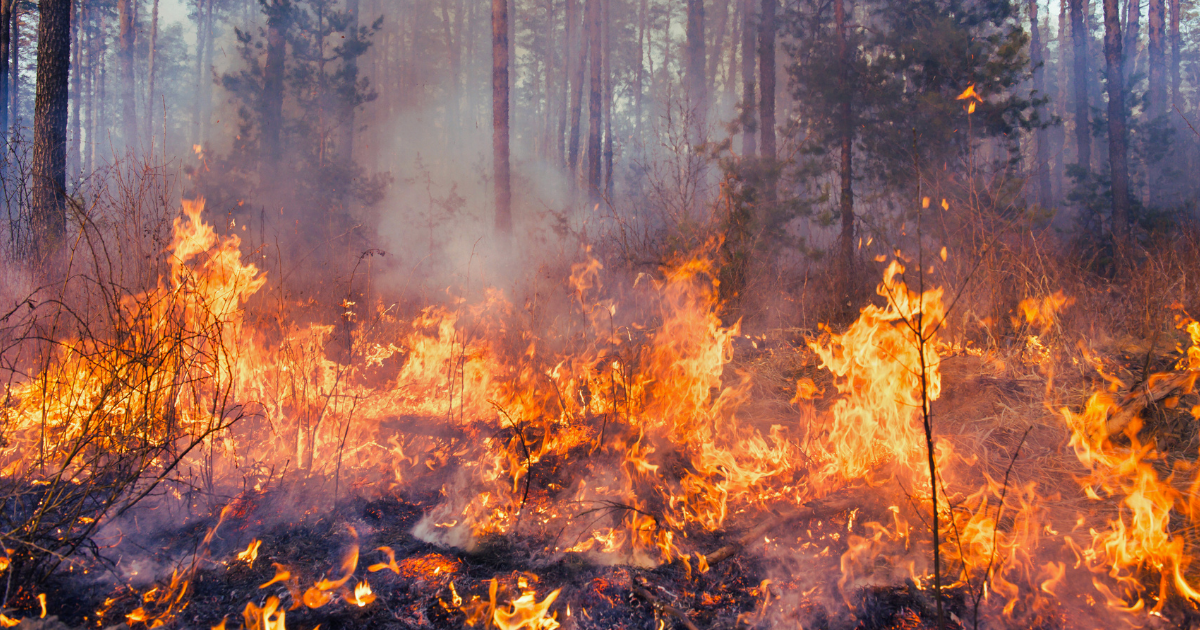
MOORE COUNTY, Tenn. — According to the rain gauge located at Tims Ford Dam, it hasn’t rained locally in 15 days and the total rainfall for the area for the entire month of October is just 2.65 inches. According to the U.S. Drought Monitor, the northern part of Moore County is experiencing extreme drought with the majority of locals sitting in severe drought zones. It’s the dry season in Middle Tennessee, and only forecasted to get drier over the winter months.
Careless debris burning is a major cause of wildfires in the winter. Moore County fire officials urge locals to avoid burning in dry weather conditions and when it’s windy. You should always keep water nearby and stay with an outdoor fire until it’s completely out.
Burn permits required through May 15
Through May 15, the Metro Volunteer Fire Department and the Tennessee Division of Forestry (TDF) would like to remind Moore County citizens that Debris Burn Permits will be required. During this time, anyone starting an open-air fire within 500 feet of a forest, grassland, or woodland must by law secure a burning permit from the Division of Forestry. To read their complete Open Burning Guidelines click here.
The permits are free and can be obtained online at the New Burn Permit Application site. Permits are available online seven days a week form 8 a.m. to 11 p.m. Permits are also available via phone Monday through Friday from 8 a.m. to 4:30 p.m. except on major holidays. Call the Moore County number at 877-350-BURN (2876).
Permits are good for single day for individual burn piles for both leaves and brush. Citizens can not burn tires or other rubber products, paints and chemicals, household trash, plastics, aerosol and food cans, electrical wiring, oils, asphalt shingles, paper products, buildings, clothing, or furniture. Large scale burning for construction site prep, agricultural clearing, wildlife area prep will require a an approved request from a a Division of Forestry representative.
Some types of debris – such as leaves, grass and stubble – may be of more value if they are not burned, according to the state website. Composting can yield valuable organic matter that can be used to enrich the soil while helping extend the useful life of landfills. In addition, tree branches, trunks, and brush can sometimes be chipped up and simply blown back into the woods or collected and hauled away. Other times, potential hazardous debris near a structure can simply be drug back into the open woods where it poses no threat to structures.
If you plan to burn, you should always notify both the local fire department and your neighbors and stay with the burn pile until it’s completely extinguished. For more information about safe debris burning and stay up-to-date on any burn bans that may be implemented during the dry winter, visit the state site by clicking here. •
ABOUT THE LYNCHBURG TIMES: The Lynchburg Times is Moore County’s most-read, independent news source and the only local media source owned by a Lynchburg native. We believe small-town newspapers are worth saving, not just here but everywhere they’re disappearing. Readers, small business partners, and underwriters who believe community journalism still matters support our work. If that idea resonates with you, consider becoming a supporter at lynchburgtimes.com.
Leave a Reply
You must be logged in to post a comment.