

By Tabitha Evans Moore
Editor & Publisher
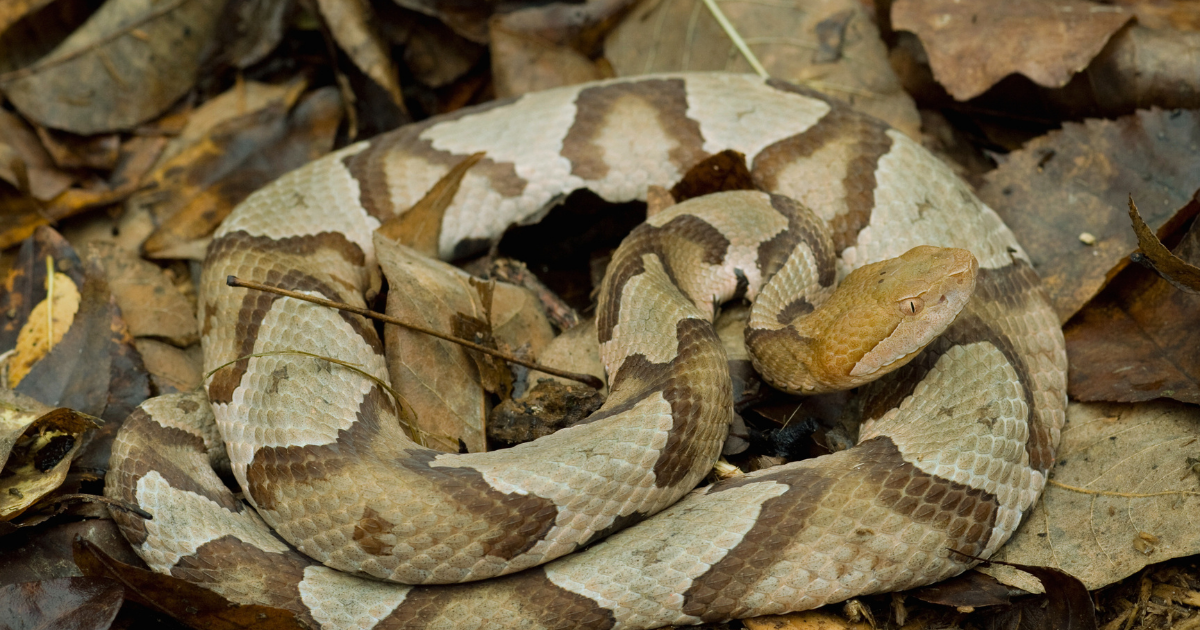
Copperhead photos have been making the rounds on local social media again this month, and it’s not your imagination — it’s that time of year. It’s baby snake season here in Moore County and across southern, middle Tennessee, and locals and hikers could encounter an unhappy accident out there in nature: baby venomous snakes. Of the four venomous snakes found in Tennessee (copperheads, timber rattlesnakes, pygmy rattlesnakes, and cottonmouths or water moccasins), locals should be most wary of baby copperheads.
Females give live birth to between one and 21 baby snakes in late summer and early fall, with seven being the average. These youngsters will blend in nearly perfectly once autumn leaves start to fall, making it a recipe for disaster. They don’t like open spaces like fields and instead will hide under logs, rocks, and leaf piles. They’ve been known to follow prey into backyards, where they can wind up wrapped around a pet water bowl or inside a child’s toy. Those clearing debris in an overgrown area, or cleaning out barns or outbuildings, should be especially careful.
They aren’t especially aggressive but will strike if cornered. A copperhead bite isn’t usually life-threatening for an adult, since their venom isn’t all that potent, but a bite can quickly escalate in a small child or pet.
If you encounter one, it’s best just to walk away, say the folks at the Tennessee Wildlife Resources Agency. Attempting to kill or remove the snake could result in a bite. Plus, unless it poses an immediate threat, all snakes in Tennessee are protected, and indiscriminate killing is illegal. Why? Because they serve a purpose in the local ecosystem, says the UT Extension office.
“Snakes play a vital role in our natural communities, helping keep rodent populations in check and providing food for other predators,” the office says on its website. “If snakes are common around the house, it is probably because there is an abundance of rodents in the area.”
According to the Tennessee Herpetological Society, venomous snakes in Tennessee all belong to a family of snakes called pit vipers, which have specialized, heat-sensing pits on the front of their heads. They possess an arrowhead-shaped head that’s offset from the rest of their body. With non-venomous snakes, it’s often hard to tell where the head ends and the body begins. Venomous species also have vertical eyes with an elliptical pupil.
Only 10-12 people die from snake bites each year in the United States. In the past 40 years, there have been only seven recorded deaths from snakebites in Tennessee, according to Craig Harper, an Extension Wildlife Specialist. If bitten, you should immediately seek medical treatment.
To learn more about copperhead snakes, visit the Tennessee Wildlife Resources Agency (TWRA) website. •
ABOUT THE LYNCHBURG TIMES: The Lynchburg Times is Moore County’s most-read, independent news source and the only local media source owned by a Lynchburg native. We believe small-town newspapers are worth saving, not just here but everywhere they’re disappearing. Readers, small business partners, and underwriters who believe community journalism still matters support our work. If that idea resonates with you, consider becoming a supporter at lynchburgtimes.com.