

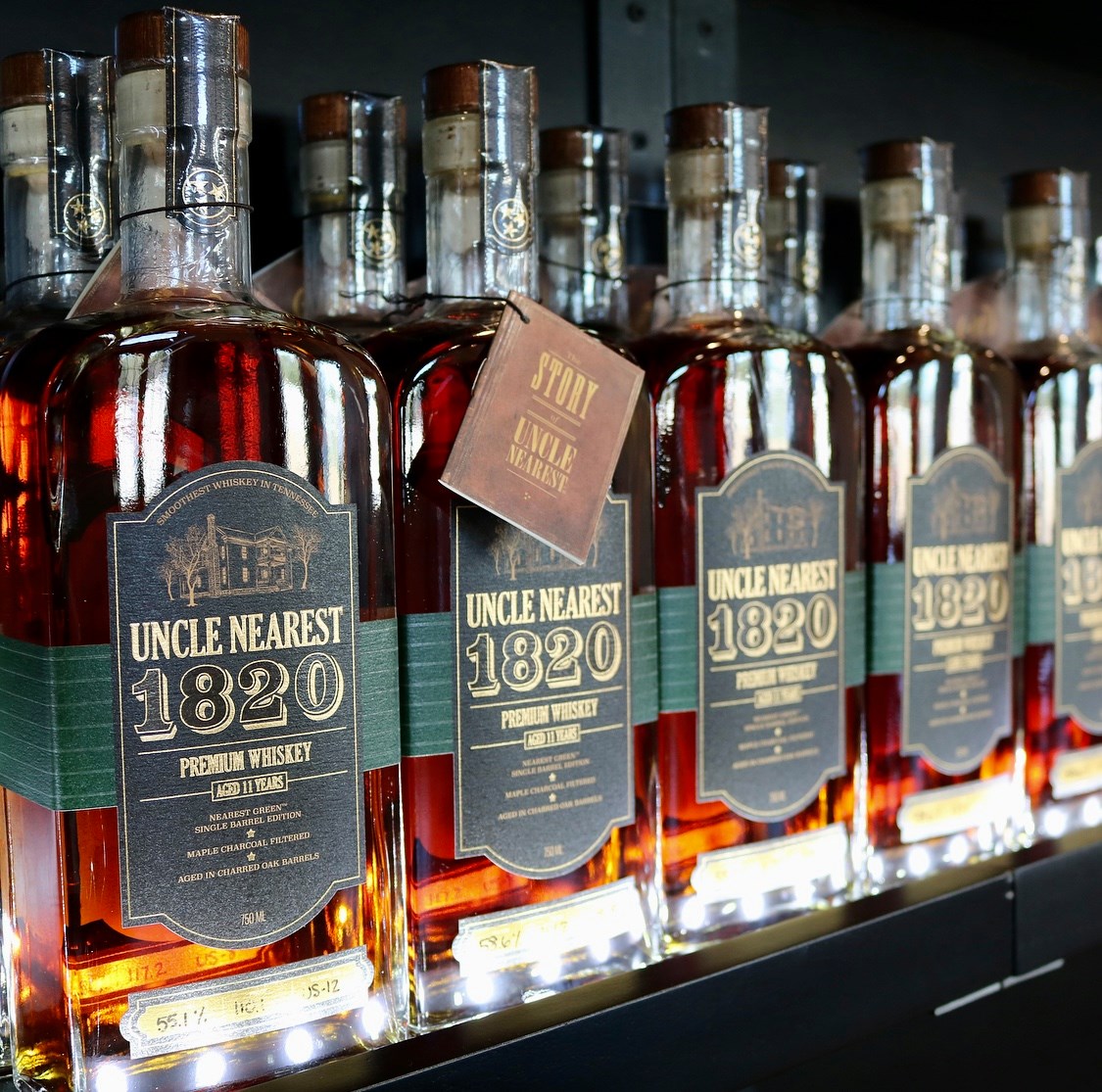
WINCHESTER, Tenn. — A federal judge has refused to end the court-appointed receivership overseeing Uncle Nearest, Inc., finding the company insolvent, its founder not credible, and its leadership responsible for concealing a $20 million loan from its primary lender — a conclusion the judge said was proven by “clear, unequivocal and convincing evidence.”
The 62-page ruling, issued Tuesday by U.S. District Judge Charles E. Atchley, Jr., also expanded the receivership to include Grant Sidney, Inc., the personal holding company of Uncle Nearest founder Fawn Weaver. The order resolves two long-pending motions — one filed by the Weavers seeking to end the receivership entirely, and one filed by receiver Phillip G. Young, Jr. seeking to bring additional Weaver-affiliated entities under his control.
Uncle Nearest Premium Whiskey, a Bedford County distillery with deep ties to Lynchburg, sits at the center of the case. Nathan “Nearest” Green was the formerly enslaved Black man credited with teaching Jack Daniel how to make whiskey. Fawn Weaver founded the company in 2017 to honor his legacy.
{Editor’s Note: This article is based on a court order issued May 26, 2026, by U.S. District Judge Charles E. Atchley, Jr., in Farm Credit Mid-America, PCA v. Uncle Nearest, Inc., et al., Case No. 4:25-cv-38, pending in the U.S. District Court for the Eastern District of Tennessee, Winchester Division. The order, Document 198, is a public record available through the federal court’s PACER system. All quotes are drawn directly from the court’s written opinion.}
THE CREDIBILITY FINDING
The most striking language in the order concerns the judge’s assessment of Fawn Weaver herself. After observing her testimony at a February 9 hearing and reviewing multiple declarations she filed, Judge Atchley wrote that the court had “the firm conviction that Fawn Weaver’s testimony thus far — whether on the witness stand or through her many declarations — has been guided by the story she believes best serves her personal interests, irrespective of its relation to the truth.”
That finding runs through the entire order, undercutting nearly every argument the Weavers advanced. When Weaver’s testimony conflicted with documentary evidence or other witnesses, the court sided against her. When she offered explanations for financial transactions the receiver flagged as irregular, the court declined to accept them.
THE FRAUD FINDING
The most legally significant portion of the ruling involves $20 million that Uncle Nearest received in early 2026 through convertible promissory notes from a third party identified in court records as MP-Tenn LLC. The judge found that Uncle Nearest — under Weaver’s leadership — concealed the transaction from Farm Credit Mid-America, its secured lender, and misrepresented the source of the funds.
According to the ruling, the MP-Tenn funds were deposited into an Uncle Nearest bank account and then moved to a Grant Sidney account. Weaver testified she moved the funds because she did not want them to be “snatched” by Farm Credit, and because she needed to ensure Uncle Nearest could continue financing its operations.
The judge found the concealment was deliberate. The Forbearance Agreement and accompanying Subordinated Credit Agreement — both signed by parties including Farm Credit — treated the funds as a loan from Grant Sidney rather than from MP-Tenn, with no mention of MP-Tenn anywhere in either document. The court wrote there was “only one reasonable conclusion: Uncle Nearest — under Fawn Weaver’s leadership — concealed its dealings with MP-Tenn from Farm Credit and misrepresented the $20 million MP-Tenn loaned Uncle Nearest as an infusion of Grant Sidney’s own funds.”
THE INSOLVENCY FINDING
The Weavers argued that Uncle Nearest’s enterprise value — calculated using a 12x to 13x revenue multiplier — put the company at $300 million to $325 million, well above its debts. The judge rejected that math, finding the multiplier unsupported by current market conditions and noting that the spirits industry faces significant “headwinds in the marketplace.” The court calculated total liabilities at roughly $208 million and estimated enterprise value at $50 million to $125 million — leaving the company insolvent under both measures the court applied.
The judge also found the company would collapse without outside support, writing that Uncle Nearest “would be forced to cease operations within thirty days” without continued cash infusions from Farm Credit, the court’s litigation stay, and the receiver’s guidance.
THE RECEIVER’S PERFORMANCE
Despite finding the company insolvent, the judge credited receiver Phillip Young with significant progress. The court found Young had cut Uncle Nearest’s monthly operating losses by 90 percent — from roughly $1 million per month to approximately $100,000 — “even in the face of declining sales.” The judge wrote that “any sales the Receiver may have cost Uncle Nearest are more than offset by the substantial progress he has made elsewhere.”
The court also addressed the Weavers’ argument that the receiver was doing more harm than good, finding it unpersuasive. While Uncle Nearest’s sales have declined since Young assumed control, the judge wrote that “it is virtually impossible for the Court to reasonably conclude what portion of the decline in Uncle Nearest’s growth can be attributed to the Receiver as opposed to this litigation more generally.”
GRANT SIDNEY PULLED INTO RECEIVERSHIP
The ruling expands the receivership to include Grant Sidney, Inc., Fawn Weaver’s personal holding company and Uncle Nearest’s largest shareholder with approximately 30 percent of outstanding shares. The court found Grant Sidney was “a key part of Fawn Weaver and Uncle Nearest’s efforts to hide the MP-Tenn funds and misrepresent their source.”
The judge also expressed concern that Grant Sidney may not have fully complied with a prior court order requiring it to produce five years of bank records, noting the court has “trouble taking Fawn Weaver at her word” and is “concerned there may be other ‘forgotten’ accounts lurking in the shadows.”
Young now has 60 days to investigate what Grant Sidney holds and report back to the court. He is prohibited from selling or transferring any Grant Sidney assets in the meantime.
Six other Weaver-affiliated entities the receiver sought to include — among them the Humble Baron bar at the distillery and a real estate holding company called Shelbyville Grand — were excluded for now. The judge left the door open on all of them, writing that the ruling “should not be construed as a finding that it would never be appropriate to expand the receivership” to include them.
WHAT COMES NEXT
With the receivership firmly intact and Grant Sidney now under court control, the receiver’s ongoing effort to sell substantially all of Uncle Nearest’s assets continues. Young previously told the court he hoped to identify a stalking horse bidder — a baseline buyer whose offer sets the floor for a competitive auction — before the end of April. No announcement of such a bidder has been made public as of this writing.
The sanctions motion seeking a gag order against Fawn Weaver, filed by the receiver in March, also remains pending before Judge Atchley. •
About the Lynchburg Times: The Lynchburg Times is Moore County’s locally owned, independent news source. Our reporting is supported by readers, small business partners, and underwriters who believe community journalism matters. If this story was valuable to you, consider becoming a supporter at lynchburgtimes.com.