

By Tabitha Evans Moore
Editor & Publisher
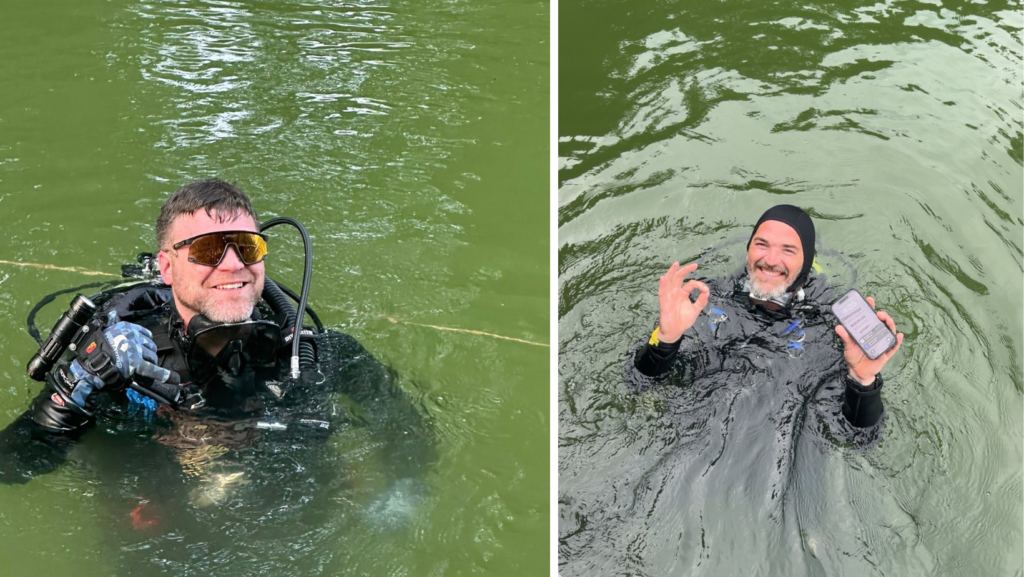
If you’ve ever dropped your keys off the dock at Tims Ford Lake or watched your phone skip off the side of your boat and into dark water, AJ Ladd and Chase Lawson — known collectively as Tims Ford Recovery Divers — may have saved your day.
It’s a side hustle that grew organically out of their work as volunteer search and rescue divers with Franklin County Emergency Management Agency (EMA), who often respond along with Metro Moore County EMA to emergencies on Tims Ford Lake.
Lawson says for years, neighbors tagged them on social media whenever someone posted about losing something precious in the lake. Eventually, they decided to get organized and offer it as a local service.
“We kept the name simple so people could find us easily on the internet,” Lawson says. “And we usually only take calls around Tims Ford because we’re on call with area rescue squads and don’t need to stray too far during the busy season.”
The business runs lean by design — just the two of them and a small network of search and rescue colleagues they can refer overflow jobs to when things get busy. Ladd came to diving through Franklin County EMA about 10 years ago. Lawson grew up doing it, learning from his grandfather as a child. Between them, their certifications run the full range of what EMA training offers: basic and advanced open water, rescue, and search and recovery certifications, plus drysuit, full face mask, and DFA Pro — first aid specifically designed for professional divers.
LAKE DIVING IS A DIFFERENT ANIMAL
Ask Ladd and Lawson what they want people to understand about their work, and they’ll tell you the same thing: Tims Ford Lake is not your vacation dive.
“Lake diving is generally much more dangerous than diving at your favorite vacation destination in the Gulf or one of the quarries closer to home,” Lawson says. “And I can’t stress that enough — our Facebook page occasionally seems to inspire a novice diver to try this stuff on their own.”
The core problem is visibility — or the near-total lack of it. While ocean and quarry divers typically work in clear water with adequate light, lake divers often operate in conditions where a flashlight illuminates nothing but silt.
“At times, the flashlight is only there for our own comfort,” Lawson said. “It doesn’t help us see objects any better.”
The hazards go further than visibility. Unpredictable currents, submerged trees, and abandoned fishing line are constant concerns. Then there’s electricity — and on that front, fresh water carries a risk that surprises most people.
“Electricity is even more dangerous in fresh water because it’s a poorer conductor,” Lawson explains. “In saltwater, you get a warning tingle before reaching the fatal zone. In a lake, you don’t.”
Navigation is also a challenge that rarely comes up in recreational diving. Without visibility, a diver can lose all sense of direction the moment they reach the bottom. That’s why the pair relies heavily on rope systems anchored to a down line. They also always carry a compass.
“You often don’t even know which direction you’re facing when you reach the bottom,” Lawson says.
HOW A RECOVERY WORKS
Because their rescue gear stays packed and ready to go at all times — sometimes already in the truck — the transition to a recovery job is fast. A caller gives them a location, and they’re on their way. Lawson says he also makes sure to confirm with each potential client that there is a fee.
“It’s hilarious how some people think we just go around doing dangerous and tedious non-emergency work for free,” Lawson noted.
On site, they gather details, establish an anchored down line as a home point, and rig additional search ropes that vary depending on the size of the area. Then they go to work. Lawson says the most difficult scenarios involve items dropped from a moving boat in open water.
“Even if they have GPS coordinates, anything dropped off a boat takes a lot of luck — especially in areas where the lake bed is muddy,” he says.
They’re upfront about those odds before accepting a job, which is part of why their success rate sits around 95 percent. Most calls are for phones, keys, wallets, and work equipment like expensive tools or broken dock cables. But the most rewarding recoveries, they say, are the ones with a sentimental weight to them.
“It’s always really fun and rewarding to see the look of relief on their face when we come back up with it,” Lawson says. “Especially when it’s something sentimental, or a phone with memories saved on it that isn’t backed up to the cloud.”
EXPLORING WHAT THE LAKE HIDES
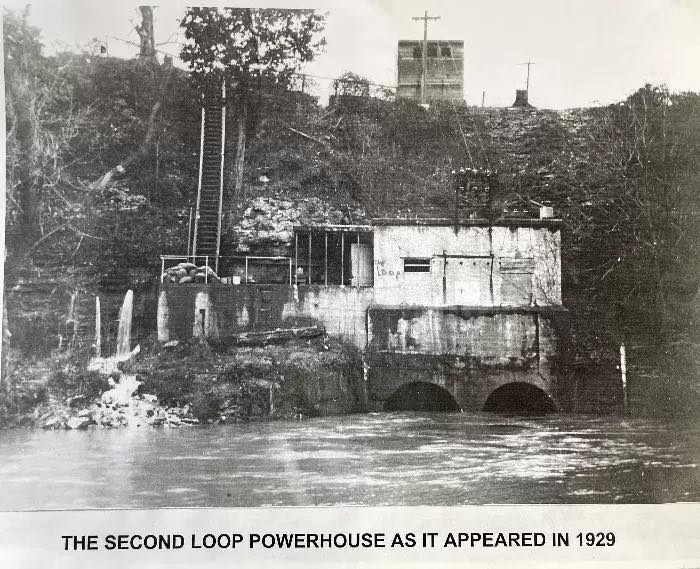
While most of their paying work centers on lost items, the pair has developed a secondary interest in the history submerged beneath Tims Ford. The lake, created by the TVA dam in 1970, flooded entire communities, and much of what those communities left behind is still down there.
Recently, the duo dove the Loop Powerhouse in Estill Springs — one of Tennessee’s first hydroelectric power plants with a sister station still visible at the Winchester City Park. They’ve documented their findings on their Facebook page and plan to explore submerged structures in the Awalt and Lost Creek areas later this year.
It’s a dimension of the work that reflects something the two bring from their EMA background: a deeper sense of what lies beneath the surface of a lake that many residents only see from above.
THE BUSINESS OF LAKE DIVING
Tims Ford Recovery Divers operates primarily from late April through October, averaging one to two calls per week. Both men hold full-time careers outside of the business, and they’re candid that this remains a side venture for now — though more specialized jobs are beginning to come in year-round as their reputation grows.
A standard recovery starts at $200, with additional fees for larger or heavier items and more extensive searches. They’re available most evenings and weekends; callers during the work week can usually be referred to a fellow search and rescue diver in their network.
They can be found and contacted through their Facebook page, Tims Ford Recovery Divers.
Their parting message to the public is direct: wear your life jacket, don’t operate a boat after drinking, and respect the lake.
“And if you enjoy scuba diving in the ocean and quarries with your open water certification,” Lawson added, “keep doing it — and leave this lake stuff to the professionals.” •
About the Lynchburg Times: The Lynchburg Times is Moore County’s locally owned, independent news source. Our reporting is supported by readers, small business partners, and underwriters who believe community journalism matters. Our small business profiles are sponsored by First Community Bank. If this story was valuable to you, consider becoming a supporter at lynchburgtimes.com.