

By Tabitha Evans Moore
Editor & Publisher
There is a particular kind of woman that small Southern towns produce in reliable quantities: the ones who stay. Not because they had to, not because the world outside was too large or too frightening, but because they looked at the place they came from and decided it was worth something — worth their time, their knowledge, their best years, and then some.
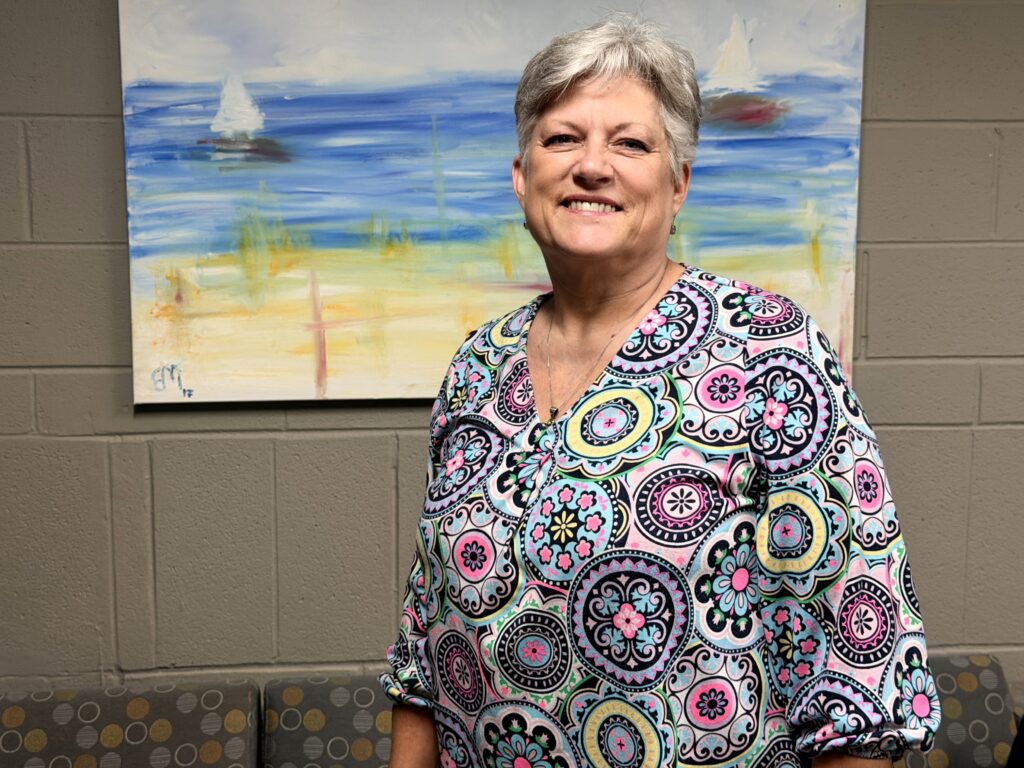
Tanya Vann is that kind of woman. She grew up in Hurdlow, on the south end of Moore County, the only daughter of Clayton and Maggie Syler, youngest of five. The family farmed the same land her great-grandparents had worked before them — a century farm now owned by one of her brothers. She played basketball, ran with the tomboy crowd, served as a class officer, wrote for the yearbook and the school paper. She graduated from Moore County High School in 1981 and left for college, which is where the story gets interesting.
The Long Arc of a Career
Tanya didn’t start out planning to be a teacher. She earned an associate’s degree in Mass Communications and Public Relations from Motlow College — practical training for a practical young woman who had heard too many times how little teachers got paid. But life has a way of routing people back toward their calling. After marrying Matt Vann in 1983 and transferring to MTSU, she completed her education degree in 1986 and never really looked back.
Her first classroom was in the Project Star program at East Lincoln Elementary, working as an assistant because local openings were scarce. In 1987, Moore County Schools hired her as a first grade teacher. What followed was nearly three decades of uninterrupted service to the children of this county — first grade, then Title 1 reading for first through sixth, then fourth grade, then back to Title 1, then the central office managing Federal Programs compliance when No Child Left Behind rewrote the rules. Then, in 2009, she took the assistant principal’s position at MCHS, stepping into the role as her predecessor retired. She held it until 2016, when she left to care for her aging parents.
Every transition in that career required her to build new skills from scratch. First grade teacher to remediation specialist to classroom generalist to central office administrator to high school assistant principal. She did each one with intention, adding a Master’s Degree in Administration and Supervision along the way. The breadth of it is unusual — few educators in a small county get to see the institution from that many angles, from the six-year-old who can’t yet read to the senior who is days from graduating.
The River and the Farm
There is one chapter of her teaching career she returns to with particular warmth. During her years with fourth grade, she attended a training on watersheds and the small creatures that live in healthy ones. Her family’s farm sat on the Elk River. She put the two things together.
Late each school year, she loaded her class onto buses and took them to the farm for a full day river study. Parents helped. Her brother led the nature portions. Her mother cooked lunch for the entire group. The students waded into the Elk River, walked the hills, found a spring on the back side of the property full of salamanders — her brother’s favorite part. Years later, former students still stop her to say that going to the river was their favorite fourth grade memory.
That is the kind of education that doesn’t show up on a standardized test. It lives in the body — in the memory of cold river water and the weight of a salamander in a cupped hand and the smell of a home-cooked lunch in the middle of a school day.
After Retirement: The Board
When Lorrie McKenzie decided not to seek re-election to the Moore County School Board, she called Tanya. The conversation didn’t take long. Tanya had spent her career moving through nearly every layer of the school system — classroom, central office, administration. She understood what the board actually did and what it didn’t, a distinction that turns out to matter.
“I think many think we hire and fire teachers,” she says with the patient clarity of someone who has explained this before. “We do hire the Director of Schools. We are policy makers for the system. We vote only on tenure for teachers, and that is through principal recommendation.”
The most rewarding part, she says, is trying to balance the scales — supporting educators while doing right by students and families simultaneously. The most frustrating is watching funding fall short of need, knowing what’s coming and not having enough to meet it. She handles it the way she has handled everything else in a career built on adaptation: by keeping her eye on what the work is actually for.
What Teachers Actually Do
Ask Tanya about the impact teachers have on children and she doesn’t reach for statistics or policy language. She reaches for stories.
She has seen teachers take students into their homes to live with their families — more than once — because without that, the student might not have graduated at all. She has seen educators come in before school or stay after, without pay, to tutor a child who was failing. She knows of a teacher who drove to a student’s home to tutor the child in reading because the parents couldn’t get them to school. She has lost count of the number of teachers who have quietly purchased school supplies, clothes, food for students who needed them and never said a word about it.
Then there is the story of a student who ran away from home and hitchhiked several miles to show up at a teacher’s door, backpack in hand, with nowhere else to go.
And the student who recently told his mother that there were only two people whose calls he would always answer: hers, and that particular teacher’s.
“A statement like that is a great honor,” Tanya says simply.
She is also caring for her aging mother now, a season of life she describes with the same quiet directness she brings to everything else. It is time-consuming. It requires a shift from thinking about your own needs to assessing someone else’s constantly — the appointments, the daily requirements, the effort to make life not just functional but genuinely happy. It is, she notes, different than she expected. Most of the things worth doing are.
There is a through line in Tanya Vann’s life that is easy to name once you see it: she has spent most of her years making herself useful to other people’s children, other people’s families, her county’s schools, and now her mother. She does it without apparent resentment and without fanfare, in the manner of women who understand that leadership at its deepest level is just sustained, unglamorous care.
The farm at Hurdlow is still in the family. The river is still there. And Tanya Vann is still, after all of it, showing up for the students of Moore County. •
About the Lynchburg Times: The Lynchburg Times is Moore County’s locally owned, independent news source. Our reporting is supported by readers, small business partners, and underwriters like our friends the Lynchburg Chamber of Commerce, who sponsored our Women’s History Month articles. If this story was valuable to you, consider becoming a supporter at lynchburgtimes.com.