

By Tabitha Evans Moore
Editor & Publisher
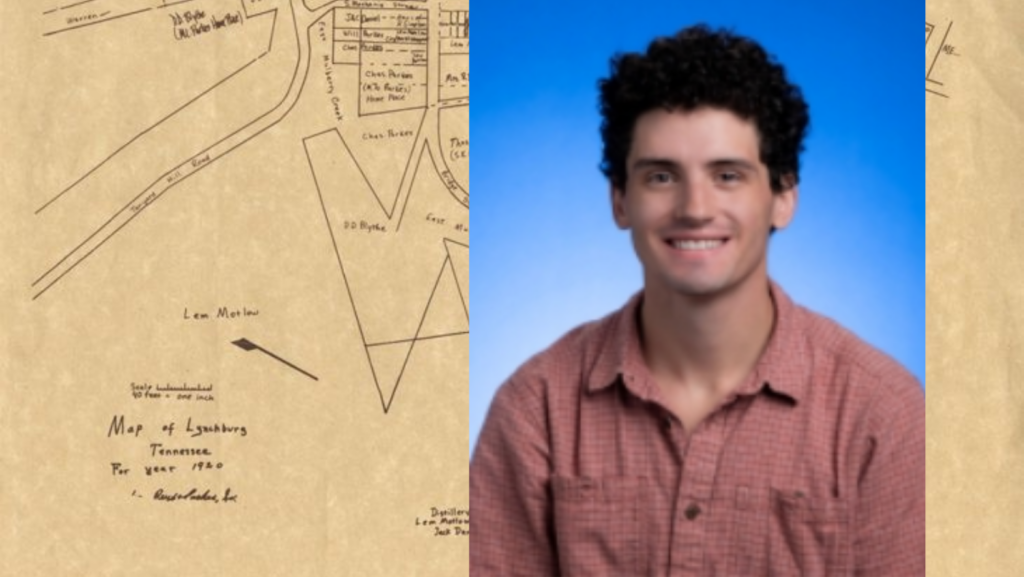
LYNCHBURG, Tenn. — When Stevie Malenowski walks into the Moore County Historic Zoning Commission meeting on April 1, he’ll be carrying something most people in the room may not fully realize: a chain of authority that runs all the way back to 1966, when Congress watched urban renewal erase half the documented historic buildings in America and decided enough was enough.
Understanding why that matters starts before you ever get to Lynchburg’s town square.
{Editor’s Note: We work hard to keep you informed. Make sure you never miss a story. Get every new headline delivered straight to your inbox with Lynchburg Times News Alert. Sign up here.}
Where it began
By the mid-1960s, federally funded highway projects and urban renewal programs had torn through the hearts of American cities at a pace that alarmed historians, architects, and everyday citizens alike. A special committee convened by President Lyndon B. Johnson studied the situation and delivered a report to Congress — With Heritage So Rich — that became a rallying cry for the preservation movement. By 1966, half of the 12,000 places the National Park Service had documented through its Historic American Buildings Survey had either been destroyed or damaged beyond repair, according to the National Parks Services.
Congress responded with the National Historic Preservation Act of 1966 — the most sweeping preservation legislation the country had ever seen. Historic structures affected by federal projects now had to be documented to standards issued by the Secretary of the Interior, and the law required individual states to take on far greater responsibility for historic sites within their own borders. The Act also established the National Register of Historic Places and created the framework that still governs preservation at every level of government today.
Tennessee had been doing some version of this work since 1919, when the General Assembly established what was then called the Tennessee Historical Committee to document the state’s participation in World War I. In 1971, the Tennessee General Assembly expanded the role of the commission to comply with the provisions of the 1966 National Historic Preservation Act, formally designating it as Tennessee’s State Historic Preservation Office — the body now known as the Tennessee Historical Commission.
How the chain of authority works
The preservation framework that governs Moore County today flows through three distinct levels.
At the top sits the federal government — specifically the National Park Service and the Secretary of the Interior, whose office sets the national standards for how historic properties are identified, evaluated, and treated. Those standards, known as the Secretary of the Interior’s Standards for Rehabilitation, are the benchmark against which preservation decisions at every level are measured.
In the middle sits the Tennessee Historical Commission (THC), which serves as Tennessee’s State Historic Preservation Office. The Commission’s mission is to protect, preserve, interpret, and administer historic places; to locate, identify, record, and nominate properties to the National Register of Historic Places; and to implement the programs of the National Historic Preservation Act of 1966. The THC also administers the Certified Local Government program, through which local commissions can access federal preservation funding and technical assistance — the role Malenowski himself holds.
At the local level sits the Moore County Historic Zoning Commission, established under authority granted by the Tennessee Code Annotated. The TCA gives local commissions the right to exist, the power to conduct design review, and the authority to create and regulate historic districts. Lynchburg’s downtown area is listed on the National Register of Historic Places as the Lynchburg Historic District — and it is the local commission’s job to protect what makes it worth that designation.
What the commission actually does — and doesn’t do
One of the most common misconceptions about historic commissions is what kind of body they actually are. Malenowski is direct about this: the Moore County Historic Zoning Commission is regulatory in nature, not legislative.
“They can suggest legislation or changes,” he explained. “One of the prime examples would be making a suggestion for removal from a historic district or creating a historic district. That zoning map comes from a recommendation by the Historic Zoning Commission that’s recommended to the Metro Council. Then they approve it.”
In other words, the commission doesn’t make law — that’s the Metro Council’s job. What the commission does is apply existing standards to specific cases: approving or denying exterior changes to properties within the historic district, issuing Certificates of Appropriateness, and in some cases initiating enforcement action when property owners make changes without authorization.
What kind of teeth does that enforcement actually have? It depends significantly on how the local ordinance is written. But Malenowski notes that commissions, depending on the language of their local historic zoning ordinance, empowered under the TCA can seek fines, liens on a building, and denial of other permits for noncompliant property owners. And if a property owner believes the commission has acted incorrectly, they have the right to appeal to the local chancery court.
The commission’s jurisdiction, he emphasizes, is limited to the exterior of buildings within the historic district — windows, doors, cladding, signage, and anything else visible from a public right-of-way. What happens inside a building is generally beyond its reach, unless interior changes alter the exterior appearance of the structure.
The question of conflict and best practices
Malenowski will share more when he presents to the Moore County Historical Planning Commission on April 1, including examples of enforcement tools used effectively in other Tennessee communities. He’ll also discuss one of the most common — and quietly damaging — patterns he sees in local commissions across the state: failure to recognize and manage conflicts of interest.
“I’ve seen this at a few zoning commission meetings throughout the state where people have a very clear conflict of interest that they’re either not disclosing, or they do disclose and the commission doesn’t ask them to recuse themselves.”
The remedy, he says, is commissions that act like the quasi-judicial bodies they are — basing decisions on the ordinance, on the guidelines, and on objective criteria rather than personal relationships or aesthetic preference.
“As long as they’re acting level-headed and making a decision based on facts — this fits the guidelines, this fits the ordinance, or it doesn’t — they should be on solid ground,” he says.
On the question of best practices, Malenowski points to the Secretary of the Interior’s Standards as the foundation, but is practical about what that looks like in a small rural community with limited resources. The goal isn’t museum-quality perfection — it’s finding solutions that meet the standards without breaking a property owner’s budget. Wood windows are expensive; aluminum windows don’t fit the historic period; a quality composite option in between might satisfy everyone.
“It’s all about trying to find solutions and compromises within those standards,” he said.
The Moore County Historical Commission will meet on Wednesday, April 1 at 4:30 p.m. with Malenowski as the guest speaker. All commission meetings are open to the general public. •
About the Lynchburg Times: The Lynchburg Times is Moore County’s locally owned, independent news source. Our reporting is supported by readers, small business partners, and underwriters like Lee Adcock Construction who believe community journalism matters. If this story was valuable to you, consider becoming a supporter at lynchburgtimes.com.