

By Tabitha Evans Moore
Editor & Publisher
LYNCHBURG, Tenn. — Members of the Metro Utility Department (MUD) Board voiced concern Tuesday over the performance of the district’s new metering system, particularly the number of water meters still requiring manual readings.
During the February board meeting, staff reported that approximately 1,600 meters are currently not transmitting readings automatically to the central office, requiring staff to conduct drive-by or manual reads. Board members expressed frustration that the number was significantly higher than than the 26 meters — mostly in the Charity community — they initially anticipated prior to the protect based on a presentation from Core & Main officials in April of last year.
Manual readings can increase labor costs and introduce billing variability when usage must be estimated. Utility systems that rely on automated transmissions are generally designed to reduce manpower, improve leak detection, and provide consistent billing data. When meters require field verification, it can affect both operational efficiency and customer experience.
Board discussion focused on whether the vendor, Core & Main, had fulfilled expectations related to remote-read capability. According to comments during the meeting, some meters were installed in drive-by (AMR) mode rather than fully automated (AMI) mode, limiting their ability to transmit readings directly to the system without field visits. These occur in areas without reliable cell or Internet signal like Ledford Mill, Hurdlow, and the Charity. Board members stressed that when the project was originally discussed, the number of meters requiring manual readings was anticipated to be much lower.
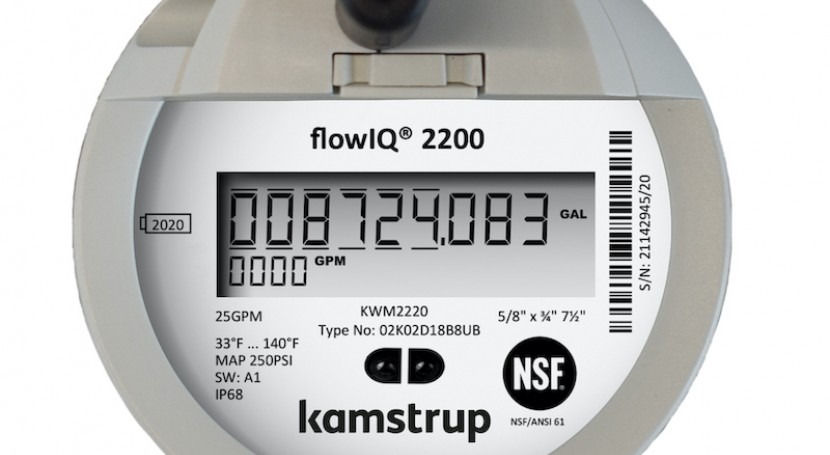
The new Kamstrup meters replaced Zenner meters installed in 2020. Board members previously approved the Kamstrup project at an estimated cost of just over $1.4 million in an effort to track excessive water loss. Officials stated Tuesday that approximately $64,000 remains outstanding on the prior $765,000 Zenner project. {To read our full coverage of the decision to switch to the Kamstrup meters, click here.}
The board also questioned whether all recommended signal sites and infrastructure had been installed to support full system functionality. Staff indicated that further evaluation and vendor communication would be necessary to determine whether additional equipment or configuration changes are required.
During the discussion, MUD Manager Ronnie Cunningham stated that the meter vendor told him that another site study might be required to fix the issue. That could take up to a year and would come with additional MUD cost — something Chair Posluszny stated was “unacceptable” and he directed MUD Office Manager Katie Goodwin to place the vendor on the March agenda to address the board’s concerns directly.
In the meantime, staff reported that readings have been estimated in some cases where meters are not yet fully integrated into the system. Officials said they are continuing to troubleshoot the system and program meters to ensure accurate reporting.
No formal action was taken during the meeting regarding the vendor contract, but board members signaled their intention to push back against the issue directly with the vendor in March.
{Editor’s Note: Public meeting coverage is crucial to the health of any community. This article remains free to all readers thanks to reader support and our community partners at Barrel House Barbecue. Please support the local small businesses that support your community newspaper.}
What This Means for Ratepayers
For now, customers will likely not notice a major difference in how their water bills arrive. The system is still functioning, and staff are continuing to collect readings — either electronically or manually.
However, because a significant number of meters are not yet transmitting automatically, some bills may be estimated based on prior usage. If a meter later comes online and reports higher or lower actual usage, that jump might take some ratepayers by surprise.
Manual readings also require additional staff time and vehicle use, which can increase operational costs. While no direct rate impact has been announced, higher operating costs can factor into future budgeting decisions.
Automated metering systems are typically designed to improve billing accuracy and detect leaks more quickly. Until all meters are fully integrated into the system, those efficiencies may not be fully realized.
The board has indicated it plans to seek clarification from the vendor regarding system expectations and performance. •
About The Lynchburg Times: We’re independent, reader-supported, and proudly homegrown. We hold the history, relationships, and journalistic craft to deliver professional reporting from one of America’s tiniest and most famous towns. Because of that, there are some stories you’ll only read in The Lynchburg Times. Every dollar of reader support stays right here in Moore County, funding local writers, photographers, and storytellers. When you support The Lynchburg Times, you’re not just backing a local newsroom — you’re preserving the art of storytelling in the South. [Join us here.]